
Context Matters!
Day Two of the IGM200 “Your Investment Ready” Workshop opened not with tactics, but with perspective.
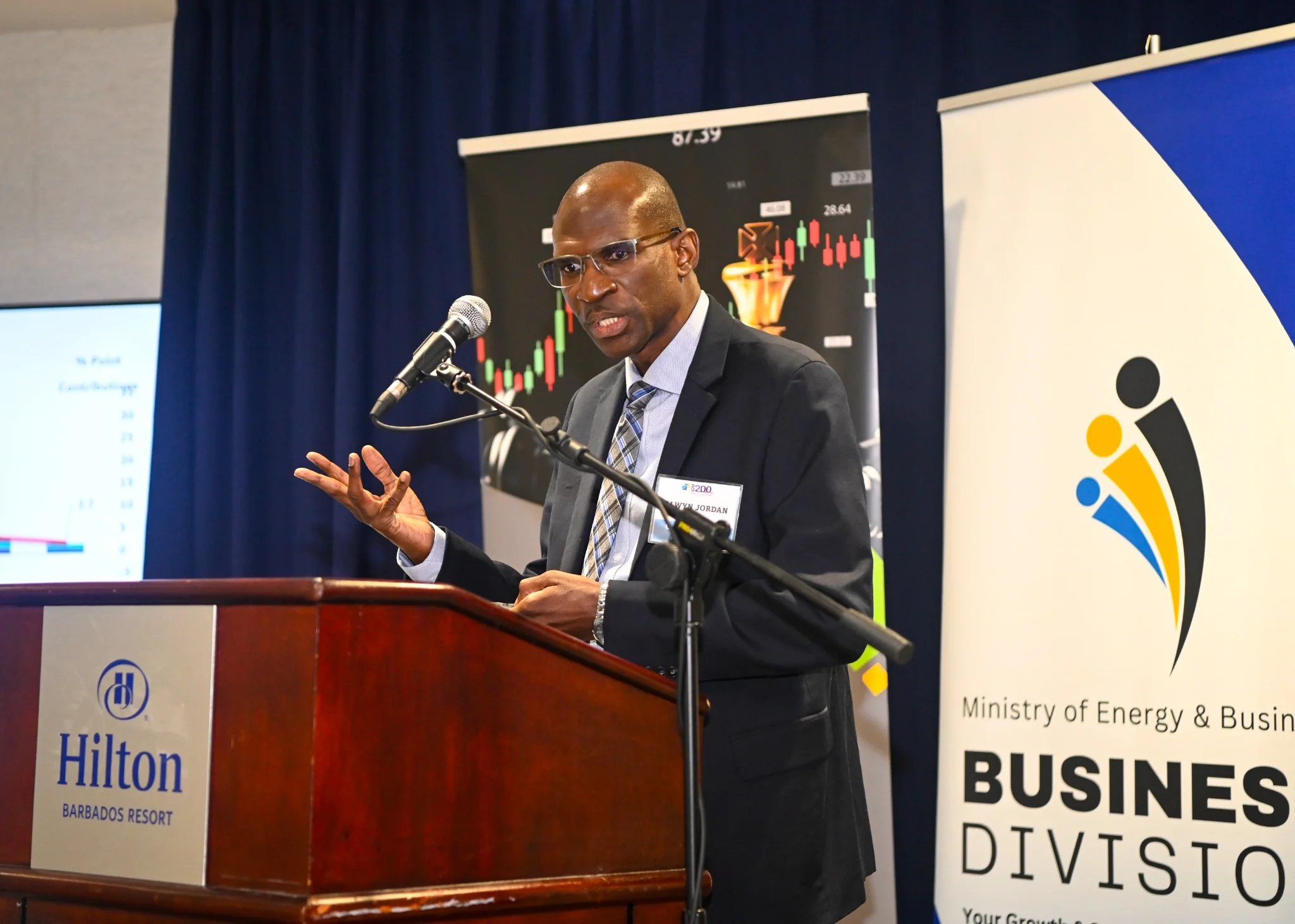
In an address delivered by Alwyn Jordan of the Central Bank of Barbados, participants were invited to step back from individual business challenges and consider a larger question: why does SME equity financing matter — now — for Barbados’ economic future?
Drawing on the Central Bank’s most recent economic analysis, the presentation framed the IGM200 initiative within a period of relative macroeconomic stability and opportunity. Barbados’ economy, Mr. Jordan noted, continues to demonstrate resilience, with real GDP growth projected at approximately 2.7%, inflation remaining low and stable, unemployment at historic lows, and foreign reserves at comfortable levels. Fiscal performance has strengthened, with declining debt ratios and sustained primary surpluses reinforcing confidence in the country’s economic direction.
This context matters.
From Stability to Opportunity
While the macroeconomic picture is encouraging, Mr. Jordan emphasised that long-term development depends on how growth is financed and where investment flows. Small and medium-sized enterprises (SMEs), he reminded participants, sit at the heart of Barbados’ economic structure — driving employment, entrepreneurship, innovation, competitiveness, and diversification.
Yet despite their importance, SMEs across Barbados and the wider Caribbean continue to face structural financing constraints. Traditional bank lending remains conservative and collateral-driven. Equity markets remain relatively shallow. Many entrepreneurs remain unfamiliar — or uncomfortable — with equity financing as an option.
This mismatch between economic potential and financing access is precisely where equity markets become relevant.
Equity as a Development Tool
Mr. Jordan’s presentation highlighted equity financing not as a replacement for debt, but as a complementary, long-term funding mechanism that is better suited to growth-oriented enterprises. Equity capital, by its nature, is more risk-tolerant. It allows businesses the time and flexibility to scale, innovate, and expand into regional and international markets.
The Innovation and Growth Market (IGM) of the Barbados Stock Exchange was positioned as a practical response to this challenge — offering SMEs a structured pathway to raise capital, improve governance, and participate more fully in national development.
International examples reinforced the point. Jamaica’s Junior Stock Exchange, launched in 2009 with reduced listing requirements, has facilitated over 40 SME listings, demonstrating how targeted equity markets can unlock capital formation and business expansion when properly designed.
Linking the Macro to the Micro
Importantly, the address did not downplay the challenges. Compliance requirements, regulatory obligations, ownership dilution, and limited market depth were acknowledged as real considerations. However, these challenges were framed not as deterrents, but as part of a necessary maturation process for enterprises seeking to grow responsibly.
This macro-to-micro framing set the tone for the rest of Day Two.
As participants moved later into technical sessions and the Investment Readiness Pitching segment, the message was clear: individual business decisions sit within a wider economic system. When SMEs strengthen governance, embrace transparency, and access equity capital responsibly, the benefits extend beyond the firm — contributing to employment, resilience, and national growth.
A Grounded Starting Point
By opening Day Two with this economic lens, the programme reinforced that IGM200 is not simply about listing companies. It is about aligning entrepreneurial ambition with national development priorities.
Equity financing, as Mr. Jordan underscored, is ultimately a tool — one that, when used wisely, supports both business success and Barbados’ long-term economic future.